

EPISODE 21
Competence or Knowledge?
We live in an age obsessed with staying up to date.
We constantly question what we do, how we can do it better, how we communicate it and which tools we use. The drive for innovation and renewal pushes us to acquire new skills, new tools, new certifications. Everything seems to point in the same direction: becoming better prepared, more effective and more competent every day.
But as we continue to accumulate expertise, are we still cultivating knowledge?
Competence and knowledge are not the same thing. Competence is vertical; knowledge is expansive. The former deepens and refines what we already know. The latter helps us question what we have come to take for granted. Both are necessary, but they serve fundamentally different purposes.
Competence reassures companies and gives professionals legitimacy because it is measurable, certifiable and marketable. We are right to consider it a value. It is. Yet precisely because it operates within a defined field, competence tends to drive incremental innovation. It improves what already exists, making it more efficient, more precise, more effective.
Knowledge follows a different logic. It grows from culture, curiosity and exposure to disciplines, languages and perspectives far removed from our own. It allows us to expand the field of possibilities, make unexpected connections and imagine solutions that would rarely emerge from going deeper into a single discipline.
In this sense, knowledge is often the ground from which breakthrough innovation emerges. Perhaps this is also why it is harder to cultivate.
Deepening our expertise makes us feel competent, legitimate and secure. Exploring unfamiliar territory means accepting uncertainty, engaging with what we do not master and, for a moment, stepping outside the role of the expert.
It is a less reassuring and more demanding exercise. It exposes us to doubt, to judgement and to the possibility of being wrong. Yet it is precisely this willingness to leave familiar territory that allows us to broaden the horizons of our thinking.
Culture therefore becomes a strategic resource once again. Not as an accumulation of knowledge, but as an exercise in critical thinking. As the ability to connect different worlds. As the willingness to question our own assumptions.
The risk is that increasingly sophisticated expertise may, paradoxically, become a silent constraint on the evolution of our professions.
When we focus exclusively on vertical expertise, we risk losing the breadth of perspective that allows us to imagine the future, leaving us instead to optimise the present. The rise of artificial intelligence makes this reflection even more relevant. AI takes expertise to another level. It can process information, access knowledge and amplify specialised capabilities at an extraordinary speed. Knowledge, however, remains something different. It is fuelled by curiosity, doubt, freedom of thought and the ability to make original connections between ideas, disciplines and perspectives. A pursuit that remains, at least for now, deeply human.

01:55
21
EPISODE
Competence or Knowledge?
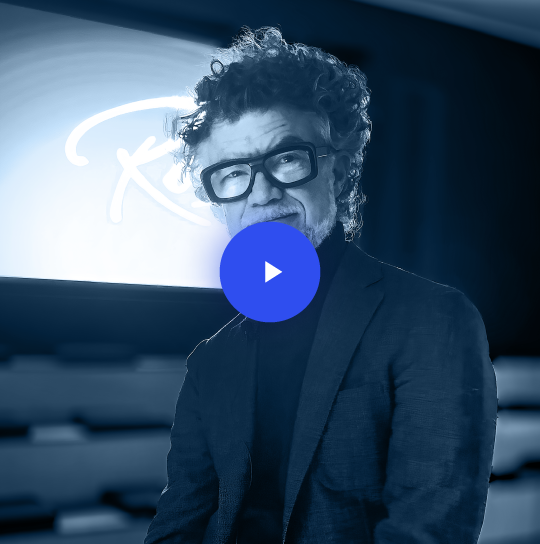
We live in an age obsessed with staying up to date.
We constantly question what we do, how we can do it better, how we communicate it and which tools we use. The drive for innovation and renewal pushes us to acquire new skills, new tools, new certifications. Everything seems to point in the same direction: becoming better prepared, more effective and more competent every day.
But as we continue to accumulate expertise, are we still cultivating knowledge?
Competence and knowledge are not the same thing. Competence is vertical; knowledge is expansive. The former deepens and refines what we already know. The latter helps us question what we have come to take for granted. Both are necessary, but they serve fundamentally different purposes.
Competence reassures companies and gives professionals legitimacy because it is measurable, certifiable and marketable. We are right to consider it a value. It is. Yet precisely because it operates within a defined field, competence tends to drive incremental innovation. It improves what already exists, making it more efficient, more precise, more effective.
Knowledge follows a different logic. It grows from culture, curiosity and exposure to disciplines, languages and perspectives far removed from our own. It allows us to expand the field of possibilities, make unexpected connections and imagine solutions that would rarely emerge from going deeper into a single discipline.
In this sense, knowledge is often the ground from which breakthrough innovation emerges. Perhaps this is also why it is harder to cultivate.
Deepening our expertise makes us feel competent, legitimate and secure. Exploring unfamiliar territory means accepting uncertainty, engaging with what we do not master and, for a moment, stepping outside the role of the expert.
It is a less reassuring and more demanding exercise. It exposes us to doubt, to judgement and to the possibility of being wrong. Yet it is precisely this willingness to leave familiar territory that allows us to broaden the horizons of our thinking.
Culture therefore becomes a strategic resource once again. Not as an accumulation of knowledge, but as an exercise in critical thinking. As the ability to connect different worlds. As the willingness to question our own assumptions.
The risk is that increasingly sophisticated expertise may, paradoxically, become a silent constraint on the evolution of our professions.
When we focus exclusively on vertical expertise, we risk losing the breadth of perspective that allows us to imagine the future, leaving us instead to optimise the present. The rise of artificial intelligence makes this reflection even more relevant. AI takes expertise to another level. It can process information, access knowledge and amplify specialised capabilities at an extraordinary speed. Knowledge, however, remains something different. It is fuelled by curiosity, doubt, freedom of thought and the ability to make original connections between ideas, disciplines and perspectives. A pursuit that remains, at least for now, deeply human.